
Running is as much a mental game as it is a physical one. At RunVermont, we understand that pushing your limits on the roads of our beautiful state, whether during a challenging marathon or a scenic 5K, often requires more than just strong legs. Developing an unshakeable running mindset and building mental toughness in running can be the key to unlocking new levels of performance and enjoyment in every stride.
We talked with Joe Connelly, RunVermont’s Chief of Race Operations, who has been involved with the M&T Bank Vermont City Marathon since its inception in 1989, to get some tips on how dialing in your mental game can transform your running experience and lead to better racing, especially as you prepare for upcoming Vermont running events. Besides his experience with RunVermont, Joe was the head coach of Men’s Cross Country at Saint Michael’s College for 21 years, retiring in 2021.
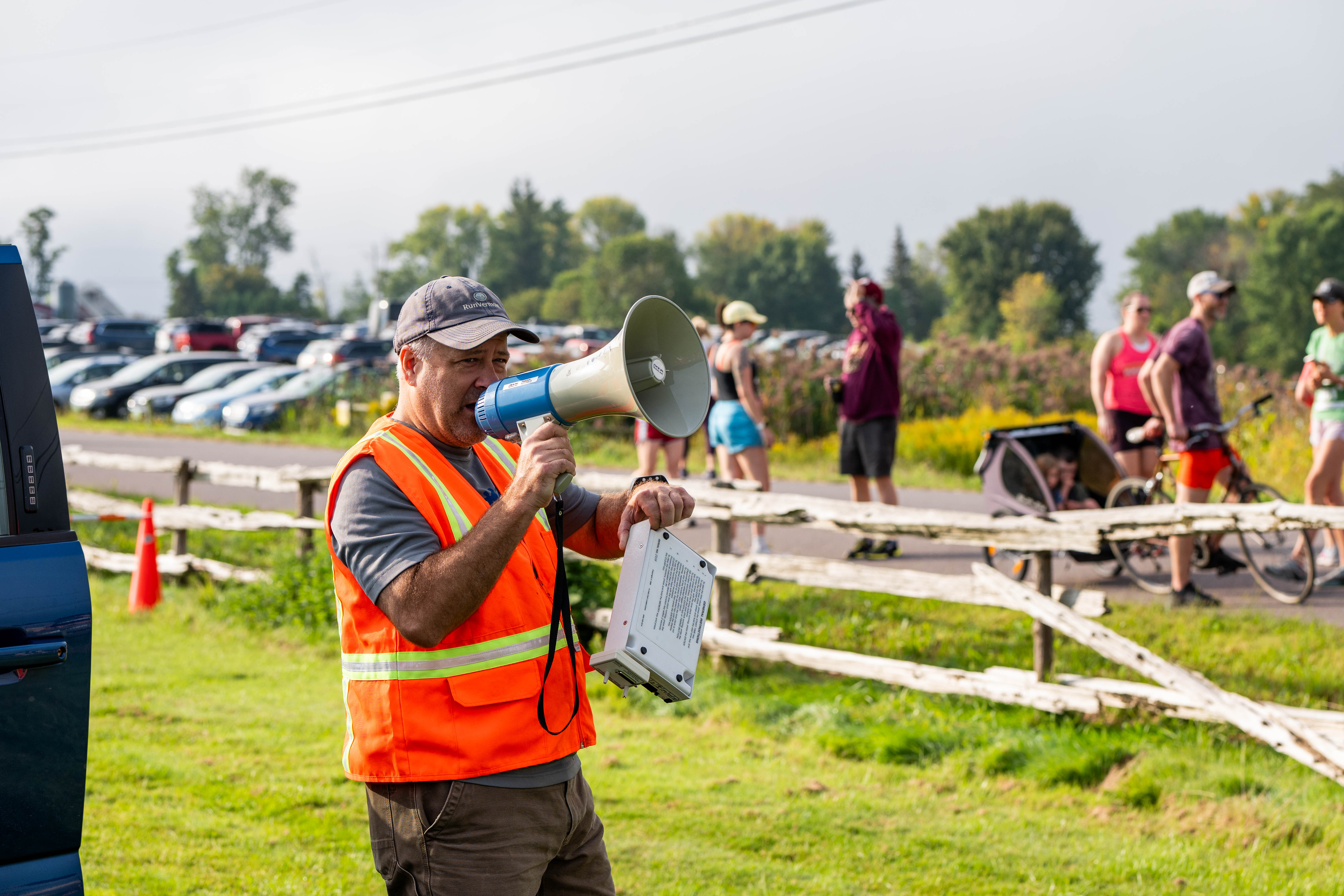 Joe Getting Participants Ready at Island Vines (2024)
Visualization: A Core Component of Your Running Mindset
Q: How can visualization help improve my running performance?
A: Visualization starts with your daily training. Runners come in all shapes, sizes, speeds, and experience levels. What we all have in common is we can all strive to "Win the Workout" every day. With my own running over the years, and with the student-athletes I coached, we always set daily, short-term (week/month), seasonal, and long-term (college career, lifetime PRs) goals. Once those goals are set, focus on doing the things today that will keep you on a path to reach those goals. Each day’s workout needs a game plan, that’s where the visualization starts.
If today is basic mileage, I’m visualizing running smoothly from start to finish and not pushing the pace. If today is hill work, I’m visualizing pushing over the top of the hill. Without that visualization plan, many runners will shut down when they reach the top of the hill. Better racing means working OVER the top. If today is intervals, I’m visualizing hitting the target pace during the intervals (not too fast, not too slow!) to end the workout with a smile on my face. Visualization in training will lead to a good habit that you will be trained to carry over to race day, significantly boosting your running mindset.
Positive Self-Talk: Fueling Your Mental Toughness in Running
 Motivational Sign at the 2025 M&T Bank Vermont City Marathon & Relay
Q: What role does positive self-talk play in running, and how can I improve it?
A: Most runners keep up an internal dialogue during their training and racing. Using that internal dialogue in a positive way can dramatically improve one’s performance and build mental toughness in running. And once again, positive internal dialogue starts in training. We all know that racing, particularly some of the hilly Vermont running events, can be challenging. As a coach, I always tried to use phrases that addressed situations in a positive way, and when having conversations with team members if they used “can’t” or “don’t” or “won’t,” I’d try to shift our phrases in a positive direction. I feel strongly that using our language like that is contagious.
Positive self-talk can be simple. When I was racing, my keyword was a simple “YES!”, or at most “I GOT THIS!” Saying that out loud during the tough parts of a race or a training session worked for me as a positive reset while letting me stay in tune with the physical demands of the moment. This kind of intentional self-talk is crucial for developing a resilient running mindset.
Conquering Distances: Strategies for Your Running Mindset
 Dan Arthur Belarmino Handling the Distance at the 2025 Half Marathon Unplugged
Q: How can I mentally handle long distances without feeling overwhelmed?
A: First off, keep in mind the distance is the same for everybody in your race. Also keep in mind, almost nobody starts with the M&T Bank Vermont City Marathon as their first race! It’s just like with your training — when you first start running, a couple miles can seem like a long way to go, but if you stick with it every day you can go a little farther. I used two techniques to handle longer distance races and training days that truly enhance your running mindset:
- “Chunking”: That’s breaking down the session into more manageable pieces. In my most successful marathons, I broke the race into four 10km sections, plus a small 2.2km section at the end. By seeing the marathon as a series of 10km chunks, I got a sense of positive accomplishment every time I checked off another 10km chunk. Then, mentally, I could put that 10km chunk behind me and focus on winning the next 10km chunk. This method significantly reduces the feeling of being overwhelmed by the full distance, building your mental toughness in running.
- “Next telephone pole” theory: This is a strategy I’ve employed when trying to build up distance. If I’m doing an out-and-back run, wherever I turned around today, tomorrow I will run just one more telephone pole before I turn around. One more telephone pole is never too far away. This incremental approach fosters a strong running mindset by making big goals feel achievable.
Process Over Finish Line: The Ultimate Running Mindset
Q: Should I focus on the finish line throughout my race?
A: In my 21 years coaching at Saint Michael’s College, we always focused on the process rather than the finish line. If you want an A in a class, you need to do the work that puts you in a position to get an A. Same with running – if you want a result you’ll be proud of, stay focused on the work. Hit your intermediate goals in training and make progress every week. When it’s race day, stay tuned in to your breathing (you’re in control), your stride, and find your flow. Hit the pace you’ve trained to hit as early as possible and enjoy the experience. The finish line will be there when you get there. This focus on the process is a cornerstone of developing true mental toughness in running.
Elevate Your Running Experience with a Stronger Mind
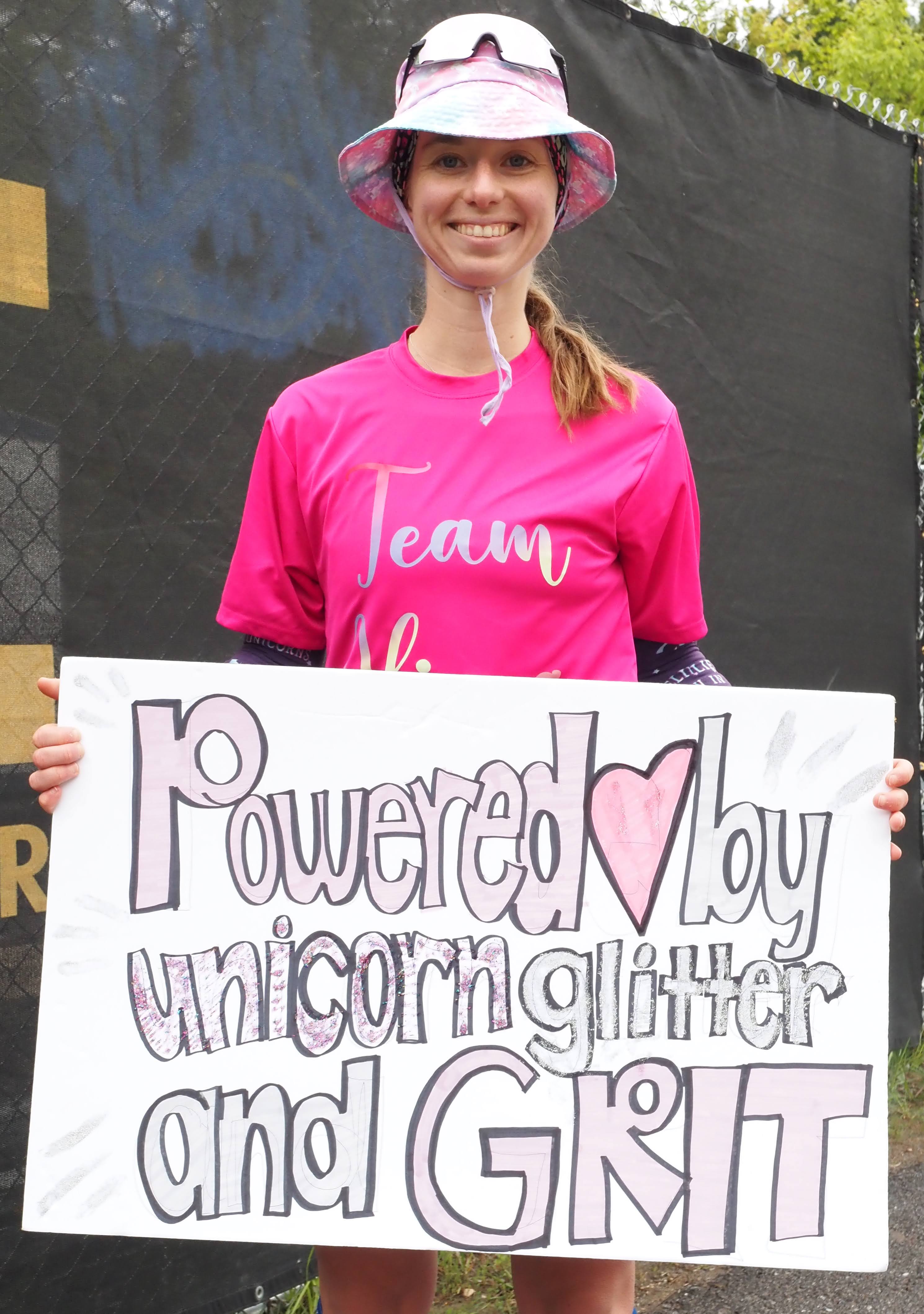
Motivational Sign at the 2025 M&T Bank Vermont City Marathon & Relay
Q: How can these mental techniques enhance my running experience?
A: A strong body and a strong mind, that’s the total package. It’s what we all strive for in our running, and it’s something we’re all capable of achieving. No matter if you’re a veteran runner and have done more Vermont running races than you can count, or a newbie lacing up your running shoes to get started, mental techniques like visualization, positive self-talk, chunking, “next telephone pole”, and staying focused on the process are building blocks that will help all runners enjoy each mile more. Cultivating a powerful running mindset and unwavering mental toughness in running will transform your performance and deepen your love for the sport.